Showing posts with label genocide. Show all posts

Tuesday, November 23, 2010

KPFA News: UN removes LGBT from list to be specially protected from unlawful execution


Link for mp3 audio: http://goo.gl/82ngM.

KPFA WEEKEND NEWS HOST GLENN REEDER:
The UN General Assembly voted this week, to remove lesbian, gay, bisexual, and transgender people from a list of vulnerable populations in need of equal protection from extrajudicial, summary, or arbitrary execution.  This UN list of vulnerable populations has included sexual minorities for the past 10 years, though some nations have argued to remove them without winning a majority till this week.   KPFA's Ann Garrison has the story.

KPFA/ANN GARRISON:
For the last 20 years, the International Gay and Lesbian Human Rights Commission has responded to the violence that lesbian, gay, bisexual and transgender people face all over the world.

IGLHRC AUDIO, FROM THEIR VIDEO ON VIOLENCE AGAINST LGBT:
I think the greatest injustice that LGBT people face is violence.  Violence is consistently used as a tool of intimidation.  In 80 countries around the world, same sex acts are criminalized in one way or another.  Tragically, today, it's far too common that LGBT people around the world are routinely and brutally attacked, tortured, and even murdered.   There's a death penalty issue in many countries, for just being gay or lesbian.  When someone is killed, in Uganda, because they've been imprisoned because of their sexual orientation, we have to respond to that, and we know how to respond to that.  We've been doing it for the last 20 years.  

KPFA/ANN GARRISON:
The list of populations that the UN General Assembly resolution identifies as particularly vulnerable to extrajudicial, summary, or arbitrary execution still includes national, ethnic, religious, or linguistic minorities, persons affected by terrorism, hostage taking or foreign occupation, refugees, internally displaced persons, migrants, street children, indigenous communities, human rights defenders, lawyers, journalists, demonstrators, targets of honor killings, and all killings committed for any discriminatory reason," BUT, the phrase "including sexual orientation" is no longer added to "any discriminatory reason," because of an amendment passed by nine votes.   Most Middle Eastern and African nations, and China and the Russian Federation, voted yeah.

The UN General Assembly votes every two years on a resolution condemning extrajudicial, summary, and arbitrary executions worldwide, which includes the list of those particularly vulnerable and in need of protection.

International Gay and Lesbian Human Rights Commission Researcher Sara Perle says that though a majority vote settles the text of the resolution, and the list, the process is most of all about building consensus:

IGLHRC/SARA PERLE:
This amendment attempts to create an obstacle to building evidence that there is consensus in international human rights law, that, discrimination on the basis of sexual orientation is never permissible.

KPFA/ANN GARRISON:
Mauritius, an island nation off the East African Coast, was the only African nation that abstained from voting, though 8 African nations were not present to vote.

The Democratic Republic of Congo and neighboring East African nations of Rwanda, Uganda, and Burundi, all voted to remove "including sexual orientation," and all have proposed and/or existing laws criminalizing homosexuality.

Legislation pending in Uganda and Congo also includes provisions for expelling human rights defenders and NGOs by criminalizing defense of LGBT rights.  The International Lesbian and Gay Human Rights Commission's Sarah Perle says that it is therefore a threat to human rights throughout the region:

IGLHRC/SARA PERLE:
Countries like Uganda are seeking to further criminalize homosexuality and it's true that the Anti-Homosexuality Bill   Even more disturbing, attacks on

KPFA/ANN GARRISON:
The UN Mapping Report on Human Rights Abuse in the Democratic Republic of Congo, leaked on August 26th and released on October 1st, documented the Rwandan, Ugandan, Burundian, and Congolese armies' guilt in war crimes, crimes against humanity, and massacres of Rwandan and Congolese Hutu civilians that an international criminal court would be expected to prosecute as genocide crime.

For Pacifica, KPFA Radio, I'm Ann Garrison.

Friday, November 19, 2010

UN removes LGBT from list to be specially protected from unlawful execution

The UN General Assembly, by a 79 to 70 vote, on Wednesday, 11.19, seems to have condoned gay genocide, by removing LGBT from a list of vulnerable populations deserving special protection from extrajudicial, summary or arbitrary execution.

The list had existed for 10 years, so this is a very singular political statement.

Many African, and Middle Eastern nations, and China and the Russian Federation, voted in favor of taking LGBT people off the list.

Mauritius, an island nation off the East African Coast, was the only African nation that abstained from voting, though 8 African nations didn't show up to vote: the Central African Republic, Chad, Equatorial Guinea, Gabon, Gambia, Guinea, Guinea-Bissau, Mauritania.

D. R. Congo and the neighboring East African nations of Rwanda, Uganda, and Burundi, all voted to remove LGBT people from the list of those in need of special protection, and all of these African nations also have proposed or existing criminalizing homosexuality and, in some cases, NGOs who defend LGBT rights.  All four of these nations have also suffered recent extremes of ethnic and political violence, which continues "with impunity," because the perpetrators are not prosecuted or "brought to book."

Press release, from the International Gay and Lesbian Human Rights Commission:

logo
INTERNATIONAL GAY AND LESBIAN HUMAN RIGHTS COMMISSION

Governments Remove Sexual Orientation from UN Resolution Condemning Extrajudicial, Summary or Arbitrary Executions


11/17/2010

For Immediate Release
Contact:
John Fisher
Co-Director
ARC International
ph: +41-79-508-3968
john@arc-international.net
www.arc-international.net
Sara Perle
Ric Weiland Research & Policy Associate
IGLHRC
ph: 212-430-6015
sperle@iglhrc.org

The International Gay and Lesbian Human Rights Commission (IGLHRC) and ARC International are deeply disappointed with yesterday’s vote in the Third Committee of the United Nations General Assembly to remove a reference to sexual orientation from a resolution on extrajudicial, summary or arbitrary executions. The resolution urges States to protect the right to life of all people, including by calling on states to investigate killings based on discriminatory grounds. For the past 10 years, the resolution has included sexual orientation in the list of discriminatory grounds on which killings are often based.

The removed reference was originally contained in a non-exhaustive list in the resolution highlighting the many groups of people that are particularly targeted by killings - including persons belonging to national or ethnic, religious and linguistic minorities, persons acting as human rights defenders (such as lawyers, journalists or demonstrators) as well as street children and members of indigenous communities. Mentioning sexual orientation as a basis on which people are targeted for killing highlights a situation in which particular vigilance is required in order for all people to be afforded equal protection.

The amendment removing the reference to sexual orientation was sponsored by Benin on behalf of the African Group in the UN General Assembly and was adopted with 79 votes in favor, 70 against, 17 abstentions and 26 absent.

“This vote is a dangerous and disturbing development,” said Cary Alan Johnson, Executive Director of IGLHRC. “It essentially removes the important recognition of the particular vulnerability faced by lesbian, gay, bisexual and transgender people - a recognition that is crucial at a time when 76 countries around the world criminalize homosexuality, five consider it a capital crime, and countries like Uganda are considering adding the death penalty to their laws criminalizing homosexuality.”
This decision in the General Assembly flies in the face of the overwhelming evidence that people are routinely killed around the world because of their actual or perceived sexual orientation, and renders these killings invisible or unimportant. The Special Rapporteur on Extrajudicial, Summary or Arbitrary Executions has highlighted documented cases of extrajudicial killings on the grounds of sexual orientation including individuals facing the death penalty for consensual same-sex conduct; individuals tortured to death by State actors because of their actual or perceived sexual orientation; paramilitary groups killing individuals because of their actual or perceived sexual orientation as part of “social cleansing” campaigns; individuals murdered by police officers with impunity because of their actual or perceived sexual orientation; and States failing to investigate hate crimes and killings of persons because of their actual or perceived sexual orientation.

"It is a matter of great shame that the responsible Committee of the United Nations General Assembly failed in its responsibility to explicitly condemn well-documented killings based on sexual orientation," said John Fisher, Co-Director of ARC international. "The credibility of the United Nations requires protection of all persons from violations of their fundamental human rights, including on grounds of sexual orientation and gender identity. We thank those States which supported the inclusion of sexual orientation in the text, and will redouble our collective efforts to ensure that Member States of the United Nations maintain the standards they have sworn to uphold."

The amendment runs counter to other positive developments in UN and regional human rights systems where there is increased recognition of the need for protection from discrimination regardless of sexual orientation and gender identity. At a September 2010 panel held in conjunction with a session of the Human Rights Council in Geneva, UN Secretary General Ban Ki-moon unequivocally recognized “the particular vulnerability of individuals who face criminal sanctions, including imprisonment and in some cases the death penalty, on the basis of their sexual orientation or gender identity.”
Sixty-eight countries have also signed a joint statement in the UN General Assembly on human rights, sexual orientation and gender identity which calls for an end to “human rights violations based on sexual orientation and gender identity … in particular the use of the death penalty on this ground [and] extrajudicial, summary or arbitrary executions.”

IGLHRC and ARC International urge all States, regardless of their vote on this amendment, to sign the UNGA joint statement affirming support of the human rights of all people, regardless of sexual orientation and gender identity and to continue in efforts to decriminalize same-sex conduct and to end other discrimination, including violence, on the basis of sexual orientation and gender identity.

The votes to amend the resolution were as follows:

In favor of the amendment to remove sexual orientation from the resolution on extrajudicial, summary or arbitrary executions (79):
Afghanistan, Algeria, Angola, Azerbaijan, Bahamas, Bahrain, Bangladesh, Belize, Benin, Botswana, Brunei Dar-Sala, Burkina Faso, Burundi, Cameroon, China, Comoros, Congo, Cote d’Ivoire, Cuba, Democratic People's Republic of Korea, Democratic Republic of Congo, Djibouti, Egypt, Eritrea, Ethiopia, Ghana, Grenada, Guyana, Haiti, Indonesia, Iran, Iraq, Jamaica, Jordan, Kazakhstan, Kenya, Kuwait, Lebanon, Lesotho, Liberia, Libya, Madagascar, Malawi, Malaysia, Maldives, Mali, Morocco, Mozambique, Myanmar, Namibia, Niger, Nigeria, Oman, Pakistan, Qatar, Russian Federation, Rwanda, Saint Kitts and Nevis, Saint Lucia, Saint Vincent and Grenadines, Saudi Arabia, Senegal, Sierra Leone, Somalia, South Africa, Sudan, Suriname, Swaziland, Syrian Arab Republic, Tajikistan, Tunisia, Uganda, United Arab Emirates, United Republic of Tanzania, Uzbekistan, Viet Nam, Yemen, Zambia, Zimbabwe

Opposed to the amendment to remove sexual orientation from the resolution on extrajudicial, summary or arbitrary executions (70):
Andorra, Argentina, Armenia, Australia, Austria, Belgium, Bhutan, Bosnia-Herzegovina, Brazil, Bulgaria, Canada, Chile, Costa Rica, Croatia, Cyprus, Czech Republic, Denmark, Dominican Republic, Ecuador, El Salvador, Estonia, Finland, France, Georgia, Germany, Greece, Guatemala, Hungary, Iceland, India, Ireland, Israel, Italy, Japan, Latvia, Liechtenstein, Lithuania, Luxembourg, Malta, Mexico, Micronesia (FS), Monaco, Montenegro, Nepal, Netherlands, New Zealand, Norway, Panama, Paraguay, Peru, Poland, Portugal, Republic of Korea, Republic of Moldova, Romania, Samoa, San Marino, Serbia, Slovakia, Slovenia, Spain, Sweden, Switzerland, Former Yugoslav Republic of Macedonia, Timor-Leste, Ukraine, United Kingdom, United States, Uruguay, Venezuela

Abstain (17):
Antigua-Barbuda, Barbados, Belarus, Cambodia, Cape Verde, Colombia, Fiji, Mauritius, Mongolia, Papau New Guinea, Philippines, Singapore, Sri Lanka, Thailand, Trinidad and Tobago, Tuvalu, Vanuatu

Absent (26):
Albania, Bolivia, Central African Republic, Chad, Dominica, Equatorial Guinea, Gabon, Gambia, Guinea, Guinea-Bissau, Honduras, Kiribati, Kyrgyzstan, Lao People's Democratic Republic, Marshall Island, Mauritania, Nauru, Nicaragua, Palau, Sao Tome Principe, Seychelles, Solomon Islands, Togo, Tonga, Turkey, Turkmenistan

Wednesday, September 29, 2010

Thursday, September 23, 2010

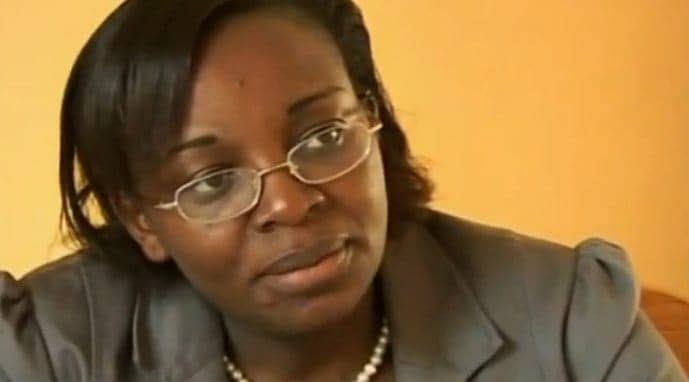
Victoire Ingabire on the UN report on Congo genocide


Victoire Ingabire Umuhoza spoke to Womens International News Gathering Service about "the Pucinella secret that so many knew but pretended not to know" in July 2010, a month before the UN confirmed it.
by Victoire Ingabire Umuhoza


Victoire Ingabire Umuhoza was widely considered the leading opposition candidate in this year’s presidential election, likely to win had the election been fair, but instead of being free to run, she was jailed briefly and is still not permitted to leave Kigali.
The U.N. report on human rights abuse, including genocide, in the Democratic Republic of Congo has been explosive in the international community, but it simply confirms what has long been a “Pucinella” secret that many knew but pretended not to know. So many atrocities were committed, some during broad daylight, in both Rwanda and Congo, during this time that they could not be concealed forever.
What happened in the Democratic Republic of Congo, the subject of the report by the U.N. High Commissioner for Human Rights (UNHCHR), was just a continuation of a pattern of atrocities that Kagame’s Rwandan Patriotic Front (RPF) committed after seizing power in Rwanda, encouraged by the silence and complacency of the international community.
Read more at San Francisco Bay View, National Black Newspaper, http://sfbayview.com/2010/on-the-u-n-report-on-congo-genocide/.


Monday, September 6, 2010

KPFA News on the UNHCHR report on Congo Genocide, 09.06.2010


KPFA Radio News on the leaked UNHCHR report documenting the RPA's massacres of Hutu people in Congo, and Kagame's threat to withdraw Rwandan "peacekeepers" from Darfur and Haiti if it's included in the official, 10.01 version:

Read more at San Francisco Bay View, National Black Newspaper, http://goo.gl/bKR9.


Rwandan "peacekeepers" prepare to board a U.S. Air Force C-130 Hercules aircraft in Sudan after a stop in Abeche, Chad, on Oct. 4, 2005. The peacekeepers are departing the region and returning to Rwanda after a six-month deployment supporting the African Union Mission. DoD photo by Master Sgt. David D. Underwood, Jr., U.S. Air Force.


Wednesday, June 9, 2010

U.S. House Resolution Urging Rwanda to Free Law Professor Peter Erlinder


Congresswoman Betty McCollum represents Professor Peter Erlinder in Minnesota's 4th District.


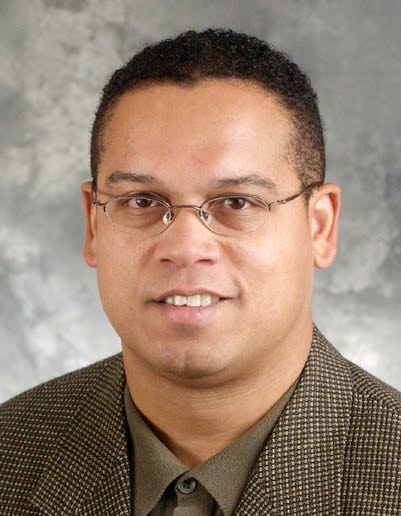
Congressman Keith Ellison, D-MN, represents Minnesota's 5th District and is a personal friend of Professor Peter Erlinder. 


Congresswoman Betty McCollum, D-MN, and Congressman Keith Ellison, D-MN, have introduced this resolution urging the Government of Rwanda to free Professor Peter Erlinder, who was arrested by the government of Rwanda on May 28th, 2010, and now remains in a Rwandan prison, denied bail.  U.S. citizens can find  telephone #s to call their House Reps and ask them to support the resolution on this Africa Faith and Justice Network page:  http://goo.gl/Wgf2. 

FREE PETER ERLINDER RESOLUTION IN THE HOUSE OF REPRESENTATIVES


HRES 1426 IH

111th CONGRESS
2d Session

H. RES. 1426
Urging the Government of the Republic of Rwanda and President Paul Kagame to immediately release human rights lawyer Professor Peter Erlinder from jail and allow him to return to the United States.


FREE PETER ERLINDER RESOLUTION IN THE HOUSE OF REPRESENTATIVES


HRES 1426 IH

111th CONGRESS
2d Session

H. RES. 1426
Urging the Government of the Republic of Rwanda and President Paul Kagame to immediately release human rights lawyer Professor Peter Erlinder from jail and allow him to return to the United States.


IN THE HOUSE OF REPRESENTATIVES
June 8, 2010

Ms. MCCOLLUM (for herself and Mr. ELLISON) submitted the following resolution; which was referred to the Committee on Foreign Affairs:


RESOLUTION
Urging the Government of the Republic of Rwanda and President Paul Kagame to immediately release human rights lawyer Professor Peter Erlinder from jail and allow him to return to the United States.

Whereas the Constitution of Rwanda, adopted on May 26, 2003, states that Rwanda is `Resolved to build a State governed by the rule of law, based on respect for fundamental human rights, pluralistic democracy, equitable power sharing, tolerance and resolution of issues through dialogue';

Whereas there is an increasing pattern of restrictions of free expression in Rwanda ahead of the August presidential elections, including the denial of a work visa to a senior Human Rights Watch researcher and the crackdown of opposition members and journalists;

Whereas the United States Government has provided over $1,034,000,000 billion in United States taxpayer-funded foreign assistance to Rwanda since 2000, and an additional $240,200,000 is proposed in the President's fiscal year 2011 budget;

Whereas Peter Erlinder is a law professor at William Mitchell College of Law in Saint Paul, Minnesota, and has served as a lead defense attorney for the United Nations International Criminal Tribunal for Rwanda in Arusha, Tanzania;

Whereas Peter Erlinder was arrested on May 28, 2010, in Kigali, Rwanda, and is currently being detained at Kicukiro Prison on charges of `genocide ideology' based in part upon legal arguments made during his work as a defense attorney at the United Nations International Criminal Tribunal for Rwanda; and

Whereas United States Department of State Spokesman P.J. Crowley announced on June 3, 2010, that the United States Government was pressing the Government of Rwanda to `resolve this case quickly' and that the Department of State hoped for Peter Erlinder's release on `compassionate grounds': Now, therefore, be it

Resolved, That the House of Representatives urges the Government of the Republic of Rwanda and President Paul Kagame to immediately release Professor Peter Erlinder from jail and allow him to return to the United States.


Professor Peter Erlinder in handcuffs in a Kigali, Rwanda courtroom. 

Thursday, April 22, 2010

Africa's female Mandela? Victoire Ingabiré Umuhoza on trial


Opposition presidential candidate Victoire Ingabire Umuhoza stood before a judge in Kigali, Rwanda, on April 22, after the Kagame government arrested and charged her with "associating with terrorists" and "genocide ideology," a crime unique to Rwanda which includes "divisionism" and "revisionism," meaning politics, and/or attempting to revise the received history of the 1994 Rwanda Genocide.   


Two weeks earlier, on April 7th, speaking at a commemorative ceremony, on the 16th anniversary of the civilian massacres known as the Rwanda Genocide, Rwandan President Paul Kagame referred to Victoire Ingabire Umuhoza as "some lady," an example of "some people" who "just come from nowhere, useless people."  He refused to speak her proper name, though she is widely acknowledged as the leading opposition candidate in Rwanda's 2010 presidential election, and many of her supporters now call her Africa's female Mandela: 


"Some people want to encourage political hooliganism.  Some people just come from nowhere, useless people.  I see everytime in the pictures, some lady who had her deputy, a genocide criminal, her deputy, talking about "y'know, there's Rwanda Genocide, but there is another. . . so that is politics.  And the world says, 'The opposition leader!'  But I know those who say it and who support that.  They know it is wrong, but it is an expression of contempt these people have for Rwandans and for Africans, that they think Africans deserve to be led by these hooligans, and to that we say NO, a big NO.  And if anybody wants a fight there, we'll give them a fight." 
               --Paul Kagame, http://www.youtube.com/watchv=vO9Zad51kJc&feature=related


Two weeks later, on April 21st, Kagame's security police arrested Ingabire, then brought her before a Rwandan court for a bail hearing within six hours, creating a flurry of international news.   Not only the African press, but also the BBC, Radio Netherlands, CNN, Yahoo News via Agence France Presse, and other outlets around the world, including the San Francisco Bay View, National Black Newspaper, Black Star News, and Global Research reported the story, and it appeared on blogs across Africa, Europe, and North America, often with notes urging readers to contact Amnesty International and Human Rights Watch.  


Two days later, on April 23rd, Rwandan authorities gave Human Rights Watch researcher Carina Tertsakian, 24 hours to get out of the country.  


Even the New York Times, which had until then ignored this year's Rwandan presidential election, finally published three accounts of Ingabire's arrest on April 21st, and the next day the Washington Post, which had also been ignoring the story, finally published a Reuters wire reporting that Ingabire had been released on bail that morning.


Shortly after the news of her release, the International Humanitarian Law Institute of St. Paul Minnesota announced that its director, William and Mitchell Law School Professor Peter Erlinder, and Wichita Lawyer Kurt P. Kerns, will join Ingabire's Rwandan lawyer Protais Mutembe in her legal defense.   Ingabire is charged with "genocide related crime," meaning crime related to the 1994 Rwanda Genocide, the central narrative justifying Rwanda's political life and relationship to the outside world, and, most of all, to its most ardent defenders and donors, the US and the UK.


Erlinder is Professor of Constitutional Criminal Law and International Humanitarian Law at William Mitchell College of Law, President of  ICTR-ADAD (Association des Avocats de la Defense), and past President of the National Lawyers Guild, NY, NY.  Most significantly, in Ingabire's case, he is the Lead Defense Counsel in the Military-1 trial at the UN's International Criminal Tribunal on Rwanda (ICTR), where he won a victory of enormous significance to Rwandan history---the acquittal of four former top military leaders accused of conspiring and planning to commit genocide or any other crimes in 1994.


The ICTR acquitted its highest ranking defendant, Colonel Bagosora, on December 18, 2008, after which Erlinder wrote:


". . . ALL of the top Rwandan military officers, including the supposedly infamous Colonel Bagosora, were found not guilty of conspiracy or planning to commit genocide. And Gen. Gratien Kabiligi, a senior member of the general staff was acquitted of all charges! The others were found guilty of specific acts committed by subordinates, in specific places, at specific times - not an overall conspiracy to kill civilians, much less Rwandan-Tutsi civilians."
"This raises the more profound question: If there was no conspiracy and no planning to kill ethnic (i.e., Tutsi) civilians, can the tragedy that engulfed Rwanda properly be called “a genocide” at all? Or, was it closer to a case of civilians being caught up in war-time violence, like the Eastern Front in WWII, rather than the planned behind-the-lines killings in Nazi death camps? The ICTR judgment found the former."
"The Court specifically found that the actions of Rwandan military leaders, both before and after the April 6, 1994, assassination of former Rwandan President Juvenal Habyarimana, Rwanda's head of state at the time of his murder, were consistent with war-time conditions and the massive chaos brought about by the four-year war of invasion from Uganda by General Paul Kagame's RPF Army, which seized power in July 1994.  ----Professor Peter Erlinder, "Rwanda: No Conspiracy, No Genocide Planning. . . No Genocide?," Jurist, 12.23.2008, Global Research, 01.24.2009


Erlinder says that the Court's ruling in December 2008 should have radically revised the world's understanding of the 1994 Rwanda Genocide, but because there were no international press covering the ICTR by December 2008, 14 years after the slaughter that left 1 million or more Rwandans dead, and because of international political investment in the received history, it continues to be told in the Wikipedia and repeated by most news outlets whenever they revisit Rwanda or the Rwandan violence of 1994. 

At the ICTR, Erlinder was able to assemble the evidence and argue the case that led to the court's conclusion that there was no conspiracy, and no planning to commit genocide, and therefore no genocide crime like that covered by the international law created by the UN Convention on the Prevention and Punishment of the Crime of Genocide after the Nazi death camps of World War II.

Though the international press had indeed turned away from Rwanda and the ICTR by December 2008, its attention is now on Victoire Ingabire Umuhoza and her trial, less than four months before Rwanda's August 9th polls.  Though her party, the United Democratic Forces, (UDF)-Inkingi, remains unable to register, and she herself has now been indicted, she continues to attempt to contest the election.
"Ingabire was arrested on trumped-up, political thought crimes, including association with a terrorist group, propagating the genocide ideology, genocide denial, revisionism, and divisionism, all arising from the "crime" of publicly objecting to the Kagame military dictatorship, and Kagame's version of the Rwandan Civil War," Erlinder said.

If he and Rwandan lawyer Protais Mutembe can make the same case that he was able to make at the ICTR, then the international press may have to decide whether or not to report that, in Rwanda, in 1994, there was "no conspiracy, no planning . . . no genocide?"  This, of course, depends on how the world defines "genocide," but, the genocide ideology statutes that Victoire is charged with violating---for having said that Hutus, as well as Tutsis, were victims of crimes against humanity---would become impossible to defend.   


And, it might finally emerge that there has been a massive cover-up of the real story of what we know as the Rwanda Genocide, as Global Research writers have pointed out for years in, e.g., Rwanda: Installing a U.S. Protectorate in Central Africa and The Geopolitics behind the Rwanda Genocide; Paul Kagame Accused of War Crimes, by Michel Chossudovsky, The US Sponsored "Rwanda Genocide'" and its Aftermath
Psychological Warfare, Embedded Reporters and the Hunting of Refugees, by Keith Harmon Snow, and U.S./U.K./Allies Grab Congo Riches and Millions Die, by Peter Erlinder. 


If international reporters finally do begin to cover the real story of the Rwanda Genocide and the Congo War, then Paul Kagame's regime, which Hillary Clinton has called "the beacon of hope" for Africa, will cease to seem so to the outside world.   
  
No one, least of all Professor Erlinder, denies that the bloodshed in Rwanda, in 1994 was horrific, but he says, as he did when I spoke to him for KPFA Radio, that the received history of Rwanda in 1994, and the ensuing war in neighboring D.R. Congo are history written by the victors, and by their backers, the U.S. and the UK:


Indeed, on April 30, in an Oklahoma City, Oklahoma Court, Professor Erlinder, Kurt B. Kerns, and Oklahoma lawyer John P. Zelbst filed a lawsuit, alleging that Kagame and nine of his current and former military officers and government officials are guilty of the assassination of Rwandan President Juvenal Habyarimana and Burundian President Cyprien Ntaryamira, and subsequent acts which caused the civilian massacres that came to be known as the Rwanda Genocide, costing a million lives.  


And, that they are guilty of racketeering to acquire and maintain an interest in the resources of the eastern Democratic Republic of the Congo, at a cost of 6 million more lives.  


D.R. Congo is one of the most resource rich nations on earth and its mineral wealth, most of all its cobalt reserves, are essential to modern military industries' ability to manufacture for war.   The U.S. is the world's largest consumer of cobalt.


The eight counts alleged in Habyarimana vs. Kagame are:
  1. Wrongful Death - Murder,
  2. Crimes against Humanity, 
  3. Violation of the Rights of Life, Liberty, and Security of Person, 
  4. Assault and Battery, 
  5. Intentional Infliction of Emotional Stress, 
  6. Violations of the Racketeer Influenced and Corrupt Organizations (RICO) Act,
  7. Torture, and, 
  8. Conspiracy to Torture
Media outlets around the world reported that Kagame had escaped process service in the U.S. on April 30th, but Peter Erlinder told KPFA Radio News, that Kagame had violated the law by doing so, and, that, assuming the law is upheld, he will be served and required to answer.


Click to listen to KPFA Radio News, May 2, 2010:


As Erlinder, and lawyers Kurt P. Kerns and John P. Zelbst, prepare to advance the case against Rwandan President Paul Kagame, Erlinder and Kerns also prepare to defend Victoire Ingabire Umuhoza, against Kagame's Rwandan government.  


"I consider it my job to say things that my clients are not free to say," says Erlinder, "and I'm sure that Mrs. Ingabire realized that when she asked me to defend her." 


Also, click to play:


KPFA Radio News, April 4, 2010: Peter Erlinder and Paul Rusesabagina on the 16th anniversary of political assassinations that triggered the Rwanda Genocide. 

KMEC Radio News, April 28, 2010:  Parti Social-Imberakuri Candidate Bernard Ntaganda and banned Rwandan Umuseso Newspaper Editor Didas Gasana on political and press repression in Rwanda.     


Rwanda/Congo News videos on AnnieGetYourGang, a Youtube Channel.


Ann Garrison is an independent journalist based in San Francisco, a regular contributor to the San Francisco Bay View, National Black Newspaper, Global Research, and Digital Journal, and a news producer for KPFA Radio-Berkeley. 

Tuesday, February 2, 2010

Disputed histories of the Rwanda Genocide

Skulls of victims of one of the massacres during the 1994 Rwandan genocide displayed at the Genocide Memorial Site church of Ntarama in Nyamata, Rwanda.

I was surprised and alarmed on, 02.02.2010, to read Amil Omara-Otunnu's one-sided history of the Rwanda Genocide, "Rwanda Genocide: Lessons for Human Rights Advocacy," in the Black Star News, a publication I rely on for investigative reporting and commentary about Africa.  This is especially disturbing now, as tension around disputed Rwanda Genocide history increases amidst political repression leading up to Rwanda's August 2010 national elections.  

Professor Omara-Otunnu's elegant English, rationality, and partial rightness put this essay leagues above the vicious propaganda currently being published in the Rwanda New Times or the confusion in the Rwanda News Agency, both of which are promptly reproduced on allAfrica.com, seemingly without editorial review or discretion, but his account of the Rwanda Genocide and its aftermath is wholly biased towards Rwandan President Paul Kagame, his ruling RPF Party, and the suffering of Rwandans identified as Tutsi.  It disregards all the evidence that Kagame and the RPF are themselves guilty of major human rights violations, including compromised courts and elections, war crimes, crimes against humanity, and genocidal violence against Rwandan Hutus, and, of ruthless invasion and resource theft in Eastern Congo.  

Omara-Otunnu makes no mention of the tension and repression of opposition political parties in Rwanda now, as the nation's 2010 national elections approach.

And he makes no mention of the Human Rights Watch release pointing to the failure of the International Criminal Tribunal on Rwanda (ICTR) to indict the ruling RPF, which makes the ICTR's legacy an example of one-sided justice rather than a historic example for human rights investigations and courts to emulate.  

Nor does he mention Rwanda's prisons, which house the third highest per capita prison population in the world, including many political prisoners.

Though he decries the international community's "inaction," in accordance with the received Rwanda genocide narrative, he says nothing about evidence of foreign powers covert involvement, including that of the U.S. and its allies, and France, and/or of their ongoing involvement in Rwanda and the wider region now.

This essay is elegantly written, but the writer's disregard for disputed narratives of the Rwanda Genocide, including those of Victoire Ingabiré Umuhoza, FDU/UDF-Inkingi's 2010 presidential candidate, and the need to reconcile disputed narratives is dangerous and irresponsible.

I should add, however, that Professor Amara-Otunnu's has been outspoken in his opposition to Ugandan President Yoweri Museveni's state terror and genocidal violence against the Acholi people of Northern Uganda. 

See: 
David Barouski's Z-Space Page
Rwanda Documents Project, created by Dr. Peter Erlinger, Lead Defense Counsel for the International Criminal Tribunal on Rwanda