KPFA Weekend News Host: The prevailing narrative of the 1994 Rwanda Genocide is that extremist Hutus massacred 800,000 or more Rwandan Tutsi and moderate Hutu, who tried to protect them. But, many scholars, journalists, and human rights investigators now argue that both Tutsi and Hutu massacred one another because of their ethnicity.
The truth is now more and more significant for all Africa, as NATO wages war in Libya, and U.S. policy lobbyists promote a proposal to use Predator Drones to "stop genocide," specifically to stop the next Rwanda or Darfur from happening elsewhere in Africa, such as Libya or Sudan. KPFA's Ann Garrison spoke to a Rwandan American legal scholar and a Rwandan Genocide survivor about the Rwandan massacres of 1994.
Host Cameron Jones: The Southern Sudanese people voted for independence from Northern Sudan in January of this year, but the hotly contested, oil rich Abyei region, between the districts now scheduled to join the independent states of North and South Sudan, did not vote with the rest of the country because North and South could not agree as to who would be eligible to vote. Sudanese President Omar Al-Bashir vowed that he would not agree to Abyei becoming part of the South. This week clashes broke out again in Abyei, and the death toll is already reported to be over 100. KPFA's Ann Garrison has more.
Sudan's oil rich Abyei
district is in yellow.
Image: Wikimedia Commons
KPFA/Ann Garrison: Some sources claim that the Misseriya herdsmen identified with the North attacked the Dinka Ngok farmers identified with the South, but Government of Southern Sudan spokesperson Marial Benjamin Barnaba blamed the Sudanese Army and Popular Defense Forces loyal to Sudanese President Omar Al-Bashir.
Marial Benjamin Barnaba: “The areas being attacked are north of Abyei and the people on the attack are the Sudanese Armed Forces and the Popular Defense Forces. This morning at nine fifty am, Makir village was completely burned down by the Sudanese Armed Forces which is being claimed to be Misseriya. And other attacks are pending. The citizens of Abyei, the Ngok Dinka in this areas, they have been moving southwards because of these continuous attacks and in fact most of the causalities have been the local police, plus the civilian population.”
Nile Fortune Managing Editor
Mugume Rwakaringi.
KPFA: Nile Fortune Editor and Contributor Mugume Rwakaringi told KPFA that the people of Abyei are trapped between the counter accusations of Khartoum and Juba, the capitols of Northern and Southern Sudan, and that traditional Misseriya herdsmen and Dinka Ngok farmers would peacefully co-exist, if not for the oil thirst of the outside forces driving the conflict.
In January, as soon as the votes for independence had been counted in Southern Sudan, Massachusetts Senator and former presidential candidate John Kerry declared the U.S.A. would not leave Abyei behind.
John Kerry: “Let’s be clear. Even as today marks the end of one journey and the beginning of another, a lot of work remains ahead in the very new term in the next months of the CPA before July 9th, in order to resolve outstanding issues regarding oil revenues, borders, and of course Abyei and Darfur. Abyei is front and center on the agenda even today. Abyei is not being left behind, Abyei is not being forgotten.
KPFA: Mugume Rwakaringi's essay, "Who should save the Abyei people?" will be available tomorrow on the websites of the San Francisco Bay View and AfrobeatRadio. For Pacifica, KPFA and AfrobeatRadio, I'm Ann Garrison.
Sudan's oil rich Abyei Territory did not vote
with the rest of Southern Sudan this week because
North and South could not agree on who would
be allowed to vote.
KPFA Weekend News Host Rose Ketabchi:
The Southern Sudanese people finished voting in their referendum on independence today. A new African nation, Southern Sudan is expected to emerge as a result. However, the people of Sudan's hotly contested, oil rich region of Abyei did not vote with the rest of the South this week. KPFA's Ann Garrison reports.
KPFA/Ann Garrison:
Fighting began in the Abyei Territory, on the border of what are expected to become North and South Sudan, before the rest of the Southern Sudanese people began voting on independence last Sunday. Seventy-six people were reported dead as the fighting continued this week. Before the South began voting, Omar al-Bashir told Aljazeera that he would not accept Abyei's independence from the North:
Sudanese President Omar al-Bashir:
Sudanese President Omar al-Bashir
We will not accept Abyei to be part of the South. If any party takes any independent action over Abyei that would be the beginning of a conflict. That's why we say that the status quo in Abyei remains unchanged, with the same administration and components, until we reach a solution.
KPFA:
The Abyei Territory is an area of 4,038 square miles accorded special administrative status by the Comprehensive Peace Agreement that ended the Second Sudanese Civil War in 2005. It is not only oil rich but also very fertile agricultural land. The Dinka Ngoc farming people, who are aligned with the South, are Abyei's majority inhabitants, but the nomadic Misseriya herdsmen, aligned with the North, have grazing rights and Abyei is considered a historical bridge between North and South Sudan.
Mugume Rwakaringi, the Managing Editor of Nile Fortune, is the author of the magazine's November-December cover story "Why Abyei Oil Will Make or Break South Sudan Independence?" "On the map of Sudan itself, Abyei is a mere spot in the middle of the country," he wrote, "but because of its oil reserves, its importance is far beyond its size. Abyei is Sudan’s main oil producing region and by 2003, was responsible for over one-third of Sudan’s crude oil production.
Rwakaringi spoke to KPFA and AfrobeatRadio from Juba, the capitol of Southern Sudan:
Mugume Rwakaringi, Managing Editor of Nile Fortune, based in Juba, South Sudan
Mugume Rwakaringi:
Concerning the reaction of the Sudanese people, if the Abyei people are not allowed to vote: If the Abyei issue is not resolved, then you would expect no stability in this region. That's why the Abyei is of concern for every Sudanese. They all want the Abyei crisis resolved. That's when they would be assured of stability in their country, be it the North or the South.
KPFA:
In NBC Dateline's December 3rd "Winds of War" report, NBC host Ann Curry asked UN Ambassador Susan Rice whether she will consider intervention by a multilateral military force if war breaks out again. Rice responded that she would not rule out anything.
Mugume D. Rwakaringi, sent this, his analysis of the Sudan Referendum published in Nile Focus. Rwakarinigi is the Managing Editor of Nile Focus, and sometimes a radio reporter for the Voice of America's Sudan Focus:
By Mugume D. Rwakaringi
There has been hype over the destiny of Abyei region in the January 9th referendum of South Sudan in which South Sudan will vote to either secede from Sudan or remain in the United Sudan.
The major talking points over this issue in the referendum have been the unresolved issue over the oil rich territory of Abyei.
Recently the United States administration suggested for the first time that uncertainty still looms over Abyei even as January 9th Referendum is a few days away.
The US which has been a key player in the implementation of the 2005 Comprehensive Peace Agreement, in a resigned tone called upon the north and south to consider an alternative in the face of an impasse likely to stampede the long awaited Referendum.
The CPA which ended the bloodbath that spanned over two decades provided for the referendum as the climax of the transition period.
The referendum will essentially touch the issue of secession of the south but will most importantly inevitably decide whether Abyei and the oil resources of its surrounding areas remain part of north Sudan or join an autonomous or independent south.
In this article, we introduce the Abyei region.
Although there has been historical ties between the Dinka Ngok and the Misseriya, although usually not mentioned the standing unresolved issue lies in the natural resource; oil in Abyei region.
The Abyei territory is defined as the area of the nine Ngok Dinka chiefdoms transferred to Kordofan in 1905 and as per the Comprehensive Peace Agreement that brought an end to a two decade war between the South (predominantly Christians and African traditional religion) and the North (predominantly Moslem Arabs), the Misseriya and other nomadic peoples retained their traditional rights to graze cattle and move across the territory of Abyei.
Abyei "is a county and former district of South Kurdufan, Sudan, that is considered an historical bridge between northern and Southern Sudan." On the map of Sudan itself, Abyei is a mere spot in the middle of the country, but because of its oil reserves, its importance is far beyond its size.
Abyei is Sudan's main oil producing region and by 2003, was responsible for over one-third of Sudan's crude oil production. But the reserve has depleted since then and because of that, production volumes have reportedly declined.
While nothing has been done to address that issue, the fight for control has escalated and such that a civil war may result. There are two groups critical to the success of ending any Sudan Abyei regional conflict, the Misseriya tribe and the Ngok Dinka. The Misseriya tribe is reported to be aligned with the North Sudanese and the Ngok Dinka are joined with the South Sudanese, thus forming the perfect split. The current referendum on the future of the region gives the Ngok Dinka voting rights; really all groups should have voting rights. While the relations between the Misseriya tribe and the Ngok Dinka have been historically amicable, both have been used as the tools of Sudan leaders with no one suggesting joint control, but always some effort that seemed to favor one group over the other. The most logical solution is to achieve full voting rights for all in the region, and shared revenues from oil production between north and south Sudan. Previously, oil profits were directed toward the North in a kind of power-grab.
Important Provisions of CPA on Abyei
Net oil revenues from Abyei will be divided six ways during the Interim Period:
The National Government Fifty percent (50 %);
The Government of Southern Sudan Forty-Two percent (42%);
Bahr el Ghazal region Two percent (2%);
Western Kordofan Two percent (2 %);
Locally with the Ngok Dinka Two percent (2%); and locally with the Misseriya people Two percent (2%);
End of Interim Period
Simultaneously with the referendum for southern Sudan, the residents of Abyei will cast a separate ballot. The proposition voted on in the separate ballot will present the residents of Abyei with the following choices, irrespective of the results of the southern referendum:
That Abyei retain its special administrative status in the north;
That Abyei be part of Bahr el Ghazal. International monitors will be deployed to Abyei to ensure full implementation of these agreements.
"What's the matter wih the Save Darfur Coalition?" someone asked me yesterday. She told me she'd been giving regularly, in response to regular solicitations, for years, and she seemed to think that the organization delivered humanitarian relief on the ground, in Darfur.
Here's the Better Business Bureau's review of Save Darfur, in 2007, which said that it failed to meet three standards of charity accountability:
Standard 3: Frequency and Attendance of Board Meetings
Standard 12: Detailed Functional Breakdown of Expenses
Standard 16: Annual Report - Have an annual report available to all
Their program budget that year had been over $48 million, nearly $34 million of which went to advertising their campaign regarding U.S. foreign policy. They gave nothing to deliver food, medical relief, shelter, education, or infrastructure in Darfur.
Its Executive Director David Rubinstein, in 2007, earned $169,678.
Year, State Incorporated: 2005, District of Columbia Affiliates: None Stated Purpose: “to raise public awareness and mobilize an effective and immediate response to end the atrocities in Sudan’s western region of Darfur.”
Standard 3: Frequency and Attendance of Board Meetings - An organization shall have a minimum of three evenly spaced meetings per year of the full governing body with a majority in attendance, with face-to-face participation. A conference call of the full board can substitute for one of the three meetings of the governing body. For all meetings, alternative modes of participation are acceptable for those with physical disabilities.
SDC does not meet the meeting frequency provision of this Standard for meetings held in the past fiscal year because although six meetings were held, only one was in person.
Standard 12: Detailed Functional Breakdown of Expenses - Include in the financial statements a breakdown of expenses (e.g., salaries, travel, postage, etc.) that shows what portion of these expenses was allocated to program, fund raising, and administrative activities. If the charity has more than one major program category, the schedule should provide a breakdown for each category.
SDC does not meet this Standard because its financial statements did not include a detailed functional breakdown of expenses by natural classification (e.g., salaries, travel, postage, etc.) that shows what portion of these expenses was allocated to program, fund raising, and administrative activities.
Standard 16: Annual Report - Have an annual report available to all, on request, that includes: (a) the organization's mission statement, (b) a summary of the past year's program service accomplishments, (c) a roster of the officers and members of the board of directors, (d) financial information that includes (i) total income in the past fiscal year, (ii) expenses in the same program, fund raising and administrative categories as in the financial statements, and (iii) ending net assets.
SDC does not meet this Standard because it states it does not have an annual report covering activities conducted in the past year.
SDC is a coalition of faith-based, advocacy and human rights organizations, and community groups devoted to ending the genocide in Darfur. Through advocacy efforts, on both the domestic and international fronts the coalition is seeking to bring peace to a war-torn region. The organization advocates for ending the violence against the Darfuri people; facilitating the provision of adequate and unhindered humanitarian aid; establishing conditions for the safe and voluntary return of displaced people; promoting the long-term development of Darfur’s infrastructure; and holding the perpetrators of the genocide accountable.
For the fiscal year ended September 30, 2007, SDC's program expenses were:
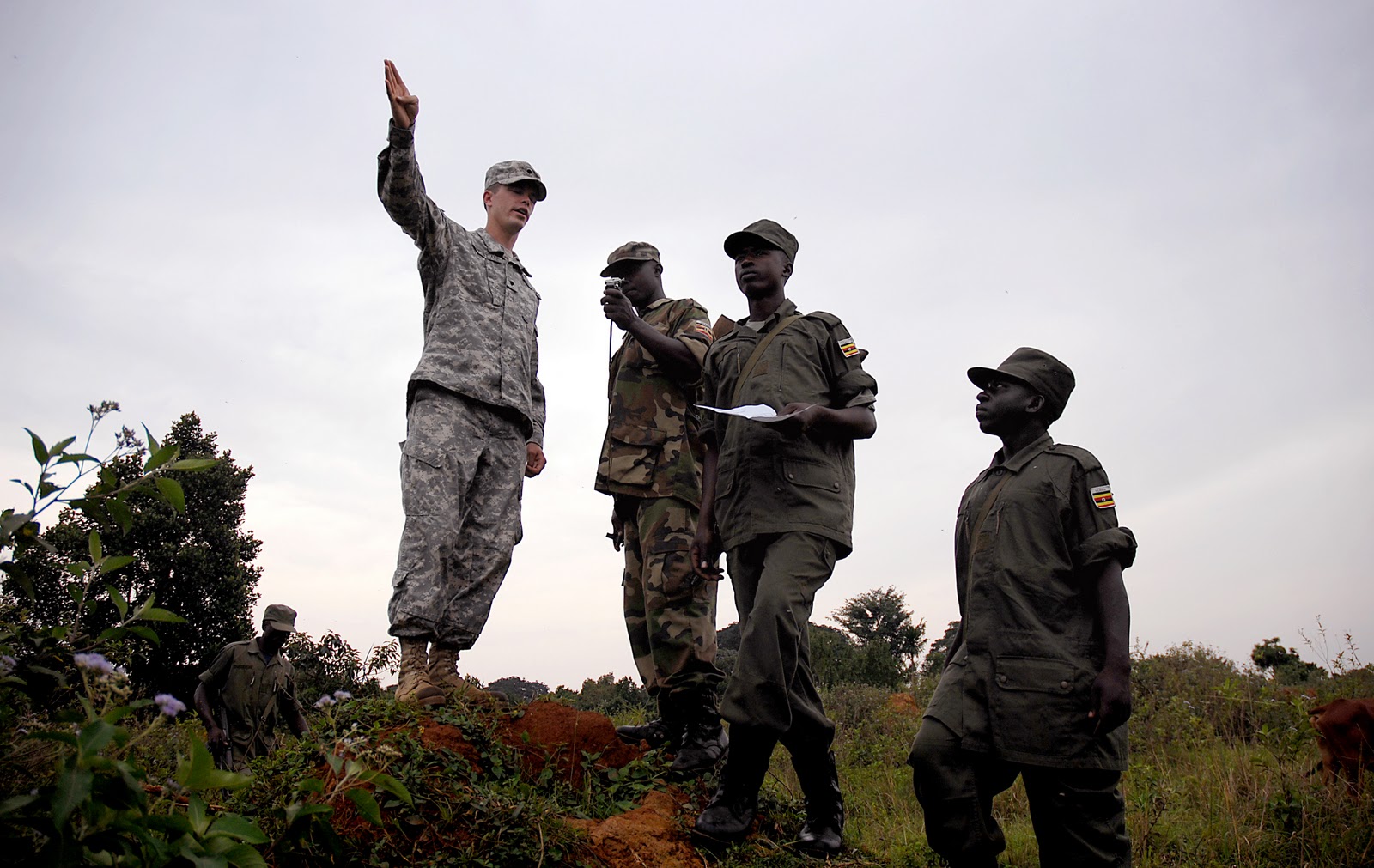
On Wednesday, November 24th, President Obama sent Congress his plan to mobilize Uganda's army, the Uganda People's Defense Force, to cross its northern border into the Central African Republic and Southern Sudan, to disarm the Lord's Resistance Army, a militia that has been fighting the Ugandan government for over 20 years. The White House issued a statement saying:
The President seemed either unaware or unconcerned about the UN Mapping Report, released on October 1st, which documents Ugandan President Yoweri Museveni's army's war crimes, crimes against humanity, and genocidal massacres of civilians, Rwandan Hutu refugees and Congolese Hutus, in the Democratic Republic of Congo.
How else could he propose to mobilize the very same army to enter the Central African Republic and Southern Sudan to protect civilians and refugees, and "meet humanitarian requirements" in "affected populations," as his strategy statement said he would?
Just over a week later, on Friday, December 3rd, NBC News Dateline aired "Winds of War, George Clooney in Sudan," which warned that the Northern Sudanese Moslem regime of Omar al-Bashir might commit genocide in Christian Southern Sudan. The next day I called Black Star News Editor Milton Allimadi from the KPFA Radio studios, in Berkeley, California, to produce this segment for the KPFA Weekend News:
KPFA Weekend News Anchor/David Rosenberg:
NBC's Dateline last night aired an hour long documentary titled "Winds of War, George Clooney in Sudan." The actor warned Dateline's audience that Sudanese President Omar Al-Bashir's regime in Khartoum has already been indicted, by the International Criminal Court, for war crimes and genocide, and that he is now amassing weapons and troops to prevent Southern Sudan from forming an independent state. Critics of U.S. interventions in the region say that the U.S. is also amassing weapons and troops to move on Southern Sudan, from the Central African Republic, and from its southern border with Uganda, to secure oil. Ann Garrison is live in the studio with this report.
KPFA/Ann Garrison:
George Clooney, on Friday night's NBC Dateline, cited the opinions of Secretary of State Hillary Clinton, the CIA, and President Barack Obama as evidence that everyone agrees that the U.S. must engage to stop genocide after Southern Sudan's January referendum, in which the Southern Sudanese are all but certain to vote for independence.
Actor George Clooney on NBC's Dateline:
The State Department said, the Secretary of State said it's a ticking time bomb. The CIA said this is the next genocide if we're not careful; it is the biggest risk. The President has said as much. This, everyone acknowledges that this is what is going to take place if someone doesn't moderate and mediate. And that's not just my saying it. That's everyone saying it. I'm just trying to say it as loud as possible.
Ann Garrison: Clooney's "everyone" did not include Ugandan American journalist Milton Allimadi, Editor of the New York City-based Black Star News. Allimadi says that if the President were really serious about stopping genocide in Africa, he would send peacekeepers into eastern Congo, where the worst African genocide is ongoing and has been for the past 16 years, with a loss of over 6 million lives.
Allimadi also said that Obama would not be martialing the Ugandan army of Yoweri Museveni in Northern Uganda, to move into the Central African Republic and Southern Sudan, enacting the LRA DIsarmament Act, after the October 1st release of the UN Mapping Report documenting the Ugandan Army's war crimes, crimes against humanity, and genocidal massacres of Hutu civilians in Congo. Allimadi says the LRA is really an excuse to secure Southern Sudanese oil after Southern Sudan's January referendum on independence.
Black Star News Editor Milton Allimadi:
I don't buy this LRA business, not for one minute. The United States is not interested in going after the LRA. If the Ugandan government, which is familiar with the terrain, could not defeat the LRA in 24 years of conflict, what added dimension can the United States bring to this? We already saw one disastrous instance, in December 2008, using U.S. logistical support and intelligence, the Ugandan Army attacked the LRA camp at Garamba, in the Democratic Republic of Congo. And the consequences were just disastrous. They failed to get the key leaders of the LRA and instead provoked massacres of innocent Congolese civilians. Who knows who did the killings, whether it was the LRA or the Ugandan troops? It was a massive disaster.
Milton Allimadi:
I think this is what's really happening:
As you know, in early January, Southern Sudan, whose capitol is Juba, is going to vote on a referendum. That referendum will decide whether it becomes an independent republic, and it's a foregone conclusion that they're going to vote for independence.
Now here's the deal. Most or all of the oil wealth that is now sustaining the government of Sudan in the North happens to be located in Southern Sudan. I don't see how the government in Khartoum can survive and sustain itself without this oil wealth.
I think the U.S. has taken a keen interest in the management and control of this oil wealth. And if you look at the map very carefully, the LRA right now, is purported to be concentrated in Central African Republic, which also conveniently happens to be bordered with the Sudan. It's on the southwestern part of the Sudan's border, so they share a border. And in fact, if you're going to look at it from a military point of view, it's half the distance to march from the outpost of the border in Central African Republic to the capitol of Khartoum than it is to march from Juba, the capitol of Southern Sudan, to Khartoum.
I am convinced that the United States, with its ally, the Ugandan dictator Yoweri Museveni, are setting up a front line in Central African Republic, in order to weaken the government of the Sudan in Khartoum and make it difficult for the government of the Sudan in Khartoum to launch an attack against Southern Sudan, should they declare independence, which is a foregone conclusion. That to me is a much more credible story than this bogus story about the U.S. wanting to go after the LRA.
KPFA/Ann Garrison:
And do you think they want to do this in order to secure Southern Sudanese oil reserves?
Absolutely. Southern Sudanese oil reserves. And that is becoming a huge oil field now. Southern Sudan borders northern Uganda. And going from that region into Western Uganda, that's a vast oil field. As you know in recent years there's been massive discoveries of oil fields in that part of Uganda as well. So if you look at this as a continuous region, starting from Western Uganda sweeping into Northern Uganda, into Southern Sudan, very rich oil fields, which, considering the U.S. presence in the region right now, is much more secure than some of the oil fields in the Middle East.
KPFA/Ann Garrison:
President Obama himself, in his 2006 Senate Bill, the Obama Congo Relief, Security, and Democracy Promotion Act, said that rebel militias serve as pretexts for Uganda and Rwanda's invasions and resource plunder of neighboring Congo, but Allimadi says that Obama, the U.S. Africa Command, and federal legislators now seem to be using the pretext themselves.
If you value my independent reporting please help support it by clicking the "Donate" button and contributing. Any amount, large or small will be important to me.


 The truth is now more and more significant for all Africa, as NATO wages war in Libya, and U.S. policy lobbyists promote a proposal to use Predator Drones to "stop genocide," specifically to stop the next Rwanda or Darfur from happening elsewhere in Africa, such as Libya or Sudan. KPFA's Ann Garrison spoke to a Rwandan American legal scholar and a Rwandan Genocide survivor about the Rwandan massacres of 1994.




 Posts
Posts




Affiliates: None
Stated Purpose: “to raise public awareness and mobilize an effective and immediate response to end the atrocities in Sudan’s western region of Darfur.”